
Your front yard does not need a full makeover to look better from the street.
Maybe your lawn looks plain. Maybe your shrubs look tired. Maybe the space near your walkway is just bare dirt and weeds. You want the front of your home to feel fresh, but you do not want to waste money on plants that die after one season.
That is where flower beds can help.
The right flower bed can frame your home, guide the eye to your front door, and make the whole yard look cared for. It can also be simple. You do not need a huge budget or a perfect yard.
Here are practical front yard flower bed ideas for curb appeal that work for small yards, full sun areas, shady entries, and low maintenance landscaping.
Curb appeal also matters if you plan to sell. The National Association of REALTORS reported that 92 percent of REALTORS suggest improving curb appeal before listing a home.
Why Front Yard Flower Beds Make Your Home Look Better
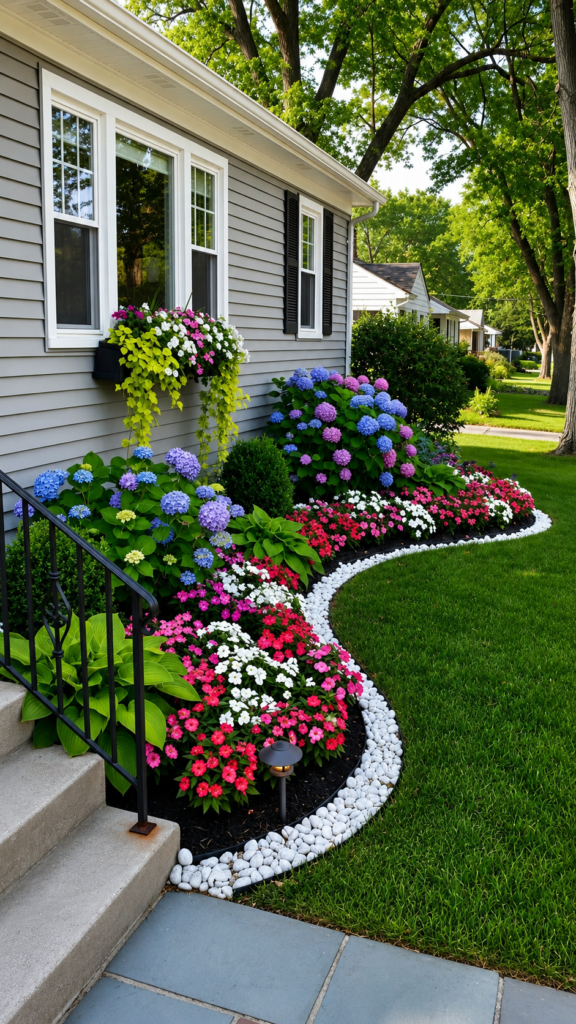
Curb appeal starts with what people see first.
That usually means your walkway, porch, front door, lawn, and the planting beds near your house. If those areas look clean and cared for, your home feels more welcoming right away.
Flower beds help because they add shape, color, and life. They can soften hard edges around brick, siding, steps, and walkways. They can also cover bare spots near the house.
A good flower bed does three simple things.
It frames your home.
It leads the eye to the entry.
It makes the yard look finished.
Fresh mulch also makes a big difference. So does clean edging. A small bed with healthy plants can look better than a large bed that is full of weeds.
The key is to be honest about what flower beds can do. Do not say flower beds alone will raise your home value by a set amount. That claim needs direct proof.
A safer claim is this: well kept landscaping is strongly tied to curb appeal and seller prep.
The NAR outdoor report found that standard lawn care service had 217 percent cost recovery. Landscape maintenance had 104 percent cost recovery. That landscape work included items like mulch, pruning, mowing, and planting annuals or perennials.
And here’s why that matters.
You do not always need the biggest project. You need the right visible project.
A neat flower bed by the walkway, porch, mailbox, or front foundation can change the way your home feels from the street.
How to Choose the Right Flower Bed for Your Front Yard
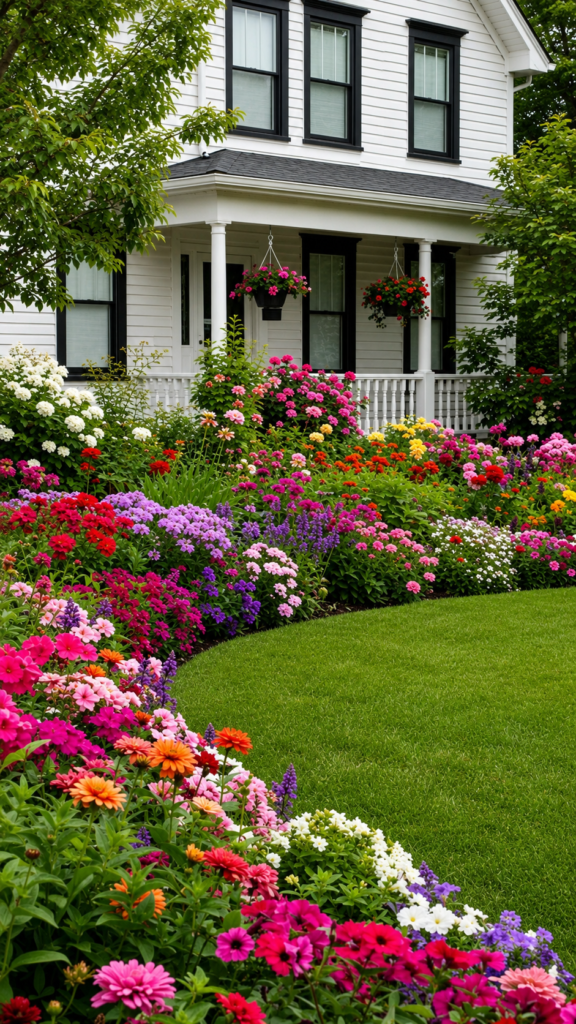
Before you buy flowers, look at your yard for one full day.
This step saves money.
Plants fail when they are put in the wrong place. A shade plant can burn in full sun. A full sun flower can look weak near a dark porch. A plant that loves dry soil can rot in a wet bed.
Start with sun.
Write down how many hours of direct sun the area gets.
Full sun means about 6 or more hours.
Part sun means about 4 to 6 hours.
Shade means less than 4 hours.
Next, check your plant zone. The USDA Plant Hardiness Zone Map helps gardeners know which perennial plants are most likely to live through winter in their area. It is based on average yearly extreme cold temperatures.
Then think about water.
If your front yard gets hot and dry, choose plants that need less water once they settle in. EPA WaterSense says water wise landscape design should use low water use or drought tolerant plants for the local area.
Now look at the shape of your home.
A cottage or ranch home often looks good with soft curved beds.
A modern home often looks better with straight beds and repeated plants.
A small house needs simple beds that do not crowd the front.
Also think about care.
If you only want to spend a little time each week, choose low maintenance front yard flower beds. Use shrubs and perennials as the base. Add annuals only where you want quick color.
Before planting, write down these details.
- Hours of sun
- Soil type
- Yard slope
- Water access
- House style
- Time you can spend each week
- Local plant zone
Once you know these things, the right flower bed becomes much easier to choose.
21 Front Yard Flower Bed Ideas for Curb Appeal
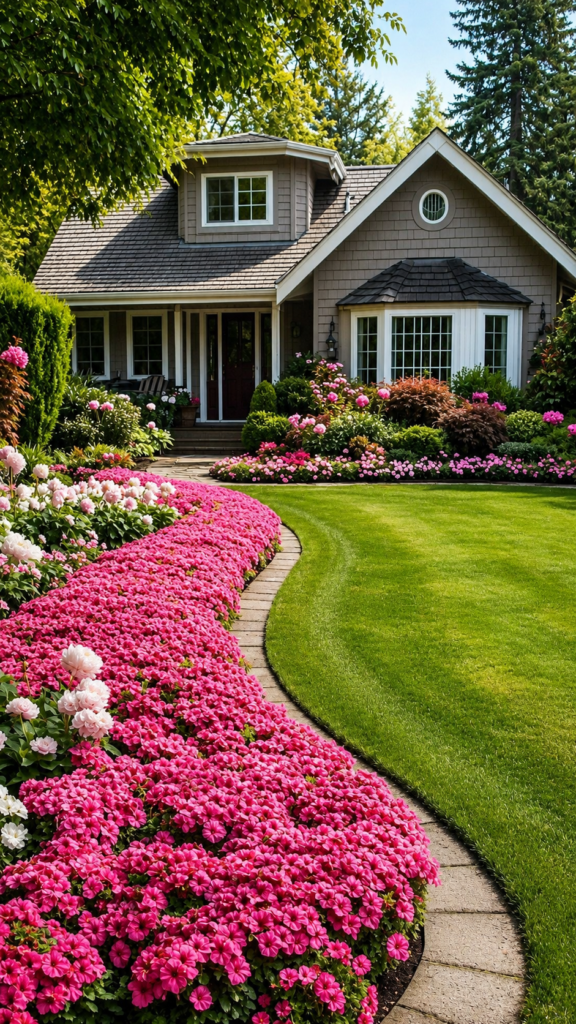
Use these ideas as starting points.
You can copy one idea, or you can mix two or three ideas together. The goal is to make your front yard look clean, useful, and easy to care for.
1. Build a Layered Flower Bed Along the Walkway
A walkway bed is one of the best front yard flower bed ideas for curb appeal because it guides people to your door.
Put taller plants at the back.
Use medium plants in the middle.
Place low plants near the front edge.
Try salvia, coneflower, catmint, and creeping phlox.
This works well for ranch homes, cottage homes, and homes with long front paths.
Keep the tallest plants away from the path so they do not flop onto the walkway.
2. Add a Foundation Flower Bed for the Front of the House
A foundation bed sits near the house.
It helps cover bare siding, exposed foundation, or empty space under windows.
Use shrubs for shape. Then add flowers for color. Finish with mulch for a clean look.
Try boxwood, hydrangea, hosta in shade, or daylily in sun.
This is one of the best flower bed ideas for front of house areas because it makes the home look more settled.
Leave space between plants and the house. Plants need air flow.
3. Plant a Mailbox Flower Bed
A mailbox bed is small, cheap, and easy to notice.
This is a smart choice if you want a quick project.
Add a clean border. Remove weeds. Add mulch. Then plant tough flowers around the base.
Try lantana, marigolds, sedum, or zinnias.
If the area is hot and dry, choose plants that can handle heat. Recent garden content also points to hardy, low care mailbox planting as a useful curb appeal idea for summer. Treat that as design inspiration, not hard proof.
4. Make a Curved Flower Bed Around a Tree
A tree bed can make a front yard feel softer.
Use shade plants if the tree blocks sun.
Try hostas, coral bells, ferns, and astilbe.
Keep mulch away from the tree trunk. Do not make a mulch volcano. That can hurt the tree.
Also avoid deep digging near roots.
This idea works best when the bed has a clear edge. A clean ring or soft curve keeps it from looking messy.
5. Create a Cottage Style Front Yard Flower Bed
A cottage bed feels full, soft, and colorful.
Use mixed heights and repeat a few colors.
Try lavender, roses, daisies, nepeta, and other long blooming flowers that work in your zone.
This style looks best when it feels full but still planned.
Do not plant every pretty flower you see.
Pick a color group first.
For example, use pink, purple, white, and soft green.
If you have pets, check plant safety before planting. Some popular flowers can be harmful to animals.
6. Add a Pollinator Friendly Flower Bed
A pollinator bed brings bees, butterflies, and birds to your yard.
Use flowers that bloom at different times of the year.
Try milkweed, bee balm, goldenrod, native asters, and coneflowers.
Garden Design’s 2026 trend report points to keystone native plants, climate ready gardens, and planting with more purpose.
This idea works best when you choose native plants for your area.
Add a clear edge so the bed looks planned from the street.
That one detail matters.
A wild looking bed still needs shape in the front yard.
7. Use a Low Maintenance Perennial Flower Bed
Perennials come back year after year.
That makes them a strong choice for low maintenance front yard flower beds.
Try black eyed Susan, sedum, yarrow, salvia, and ornamental grasses.
The first year may look small.
That is normal.
Give the plants time to fill in.
Use mulch while the plants grow. It helps reduce weeds and keeps the bed looking neat.
8. Make a Modern Minimalist Flower Bed
A modern bed looks best when it uses fewer plant types.
Repeat the same plants in clean groups.
Try ornamental grasses, lavender, allium, boxwood, and white flowers.
This works well with black, white, gray, or simple modern homes.
Use straight edges if your house has straight lines.
Keep colors simple.
White, green, silver, and purple often look clean together.
9. Create a Drought Tolerant Front Yard Flower Bed
If your front yard dries out fast, do not fight it.
Choose plants that can handle dry soil once they are established.
Try Russian sage, agastache, catmint, sedum, yarrow, and coneflower.
EPA WaterSense says low water use and drought tolerant plants should be chosen for the local area when planning water wise landscapes.
Group plants with similar water needs.
This keeps care simple.
It also helps avoid overwatering some plants while underwatering others.
10. Add a Small Front Yard Border Bed
A small front yard can still have strong curb appeal.
Keep the bed narrow, clean, and simple.
Use dwarf shrubs, compact perennials, and one or two annuals near the entry.
Do not use too many plant types.
Small spaces get crowded fast.
A simple mix can look better than a busy mix.
Try three plant types at most.
11. Frame the Front Porch With Flowers
Your porch is a natural focal point.
Use flower beds to frame the steps or the porch corners.
Try hydrangea, boxwood, salvia, or annual containers.
This idea works well because it pulls attention to the entry.
Use taller plants near porch posts.
Use lower plants near steps.
Keep the path clear.
You want the porch to feel open, not blocked.
12. Mix Rocks and Flowers for a Clean Bed
Rocks can add structure.
But do not use rocks as a full replacement for plants if you want a soft curb appeal look.
Use rocks as accents.
Try sedum, lavender, ornamental grasses, and creeping thyme.
This works well in hot, dry areas.
It also fits modern homes.
Use mulch or gravel with care.
Too much hard material can make the bed feel harsh.
13. Use Seasonal Color Near the Entry
Seasonal color gives fast results.
Use perennials as the base. Then add annuals near the porch, walkway, or mailbox.
Try pansies in cool weather.
Use zinnias in summer.
Use mums in fall.
This is a good option if you like changing the look during the year.
Keep annuals in the most visible spots.
That gives you color without planting the whole yard again.
14. Build an Entryway Statement Flower Bed
The front door should be easy to find.
A statement bed helps.
Put the brightest flowers near the door or along the path to the door.
Try hydrangeas, roses, dahlias, coneflowers, or large pots with annuals.
Use one strong color.
Then repeat it.
This makes the entry feel planned.
Do not block the steps or railings.
Safety matters as much as style.
15. Plant a Shade Flower Bed for the Front Yard
Shade beds can still look beautiful.
You may get fewer blooms, but you can use leaf color and texture.
Try hostas, ferns, coral bells, impatiens, and astilbe.
Mix large leaves with fine leaves.
This keeps the bed from looking flat.
Use light colored flowers or pale leaves near dark porches.
They brighten the space.
16. Make a Full Sun Flower Bed
Full sun gives you many flower choices.
It also means more heat and dry soil.
Use heat friendly plants and mulch well.
Try zinnias, coneflowers, lantana, blanket flower, and salvia.
Water deeply while plants settle in.
After that, many tough sun plants need less care.
Check each plant tag.
Full sun does not mean no water.
17. Mix Evergreens and Flowers
Evergreens give the bed shape all year.
Flowers add color during the growing season.
Try dwarf boxwood, dwarf spruce, lavender, daylilies, and sedum.
This idea is great if your front yard looks empty in winter.
Use evergreens as the bones of the bed.
Then add flowers around them.
The bed will still look neat when blooms fade.
18. Build a Raised Front Yard Flower Bed
A raised bed works well if your soil is poor or your yard has drainage issues.
It also gives the front yard a strong shape.
Use stone, brick, timber, or metal edging.
Keep the height in scale with your home.
A very tall raised bed can look heavy in a small yard.
This idea is good for planting near a walkway or porch.
It also makes weeding easier.
19. Use White Flowers for a Clean Look
White flowers make a front yard feel fresh.
They also show well in evening light.
Try white hydrangea, alyssum, white salvia, white roses, or white begonias.
Pair white blooms with deep green leaves.
This look works well with brick, black, gray, and beige homes.
Keep the bed simple.
Too many colors can break the calm effect.
20. Try Jewel Tone Flowers
Jewel tones feel rich and bold.
Use deep purple, red, burgundy, blue, and emerald green.
Garden Design lists jewel tones as one of the garden trends for 2026, along with climate ready planting and stronger color choices.
Try purple salvia, burgundy coral bells, dark dahlias, red zinnias, and deep green shrubs.
This look works well in strong summer light.
Use a few colors.
Do not use every bold color at once.
21. Make a Wildflower Inspired Front Yard Bed
A wildflower inspired bed can feel relaxed and full of life.
But it needs a clear edge in the front yard.
Use mowed edges, stone borders, or a small path.
Try native asters, coneflowers, black eyed Susan, bee balm, and goldenrod.
Choose plants for your area.
This helps the bed support local insects and birds.
Keep taller plants away from windows and walkways.
A natural bed still needs good manners.
Best Plants for Front Yard Flower Beds in 2026
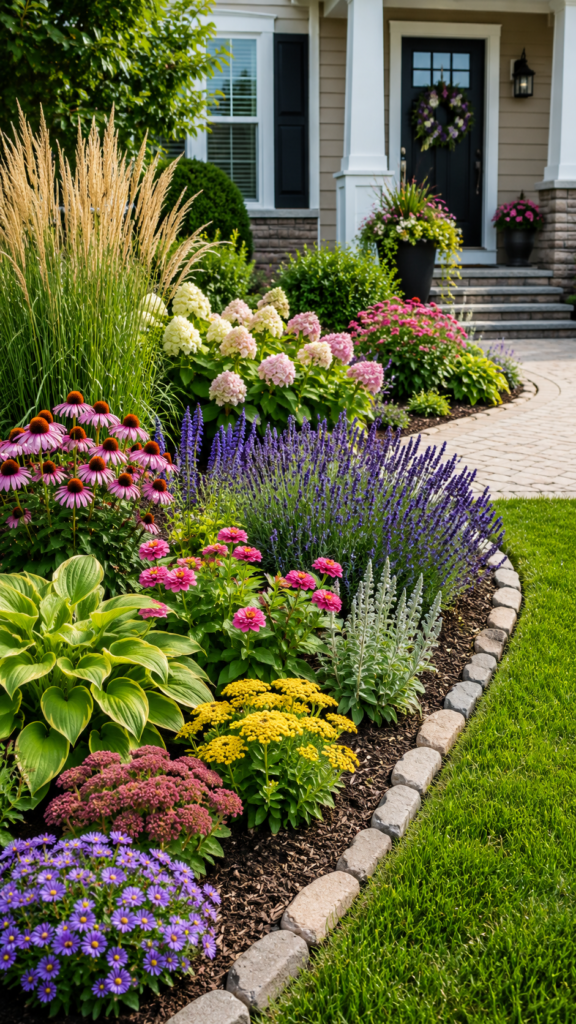
The best front yard plants are not always the prettiest plants at the garden center.
The best plants fit your sun, soil, zone, water needs, and care level.
Start with plant groups.
Annuals give quick color for one season.
Perennials come back year after year.
Shrubs give shape and structure.
Groundcovers fill low spaces.
Ornamental grasses add movement and texture.
For full sun, try coneflower, salvia, yarrow, zinnia, lantana, catmint, and lavender.
For shade or part shade, try hosta, astilbe, fern, coral bells, impatiens, and begonia.
For low care structure, try boxwood, dwarf holly, hydrangea, ornamental grasses, and sedum.
For pollinators, try milkweed, bee balm, native asters, goldenrod, and coneflower.
Do not copy a plant list without checking your local area.
A plant that works in Oregon may fail in Arizona. A flower that thrives in New England may struggle in Florida heat.
Use the USDA Plant Hardiness Zone Map before you buy perennials.
Also check your local extension office or a local nursery.
They know what grows well near you.
Easy Flower Bed Layout Rules That Make Your Yard Look Designed
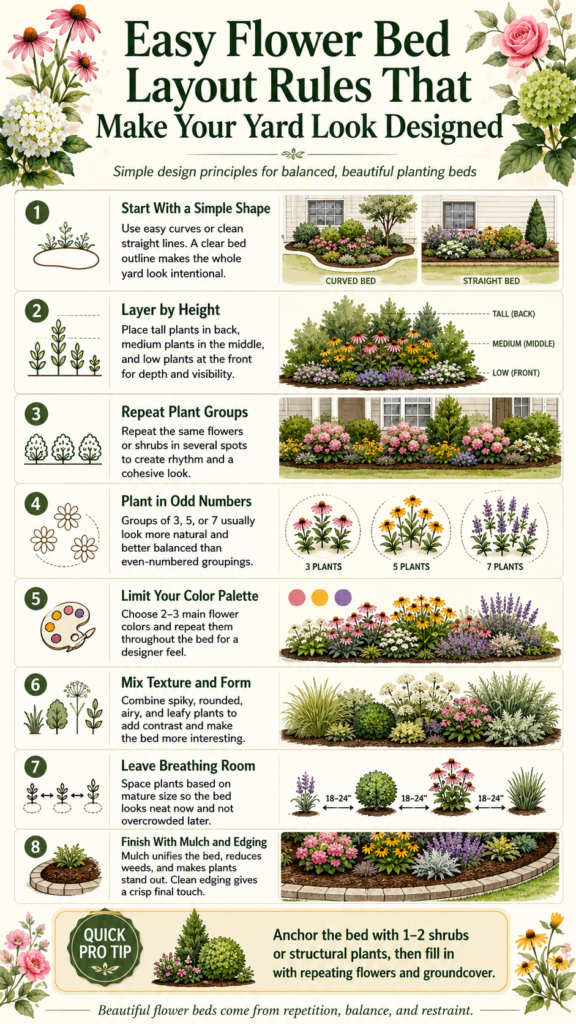
A flower bed looks better when it has order.
Start with repetition.
Repeat the same plant three, five, or seven times.
This makes the bed feel calm.
Next, layer by height.
Put tall plants in the back.
Put medium plants in the middle.
Put low plants in the front.
Leave space for plants to grow.
Nursery plants often look small in pots, but many get much wider.
Use one focal point near the entry.
That could be a tall pot, a small tree, a strong shrub, or a group of bright flowers.
Keep the bed deep enough.
Very thin beds can look weak.
A front foundation bed often looks better when it has enough depth for shrubs and flowers.
Here is a simple formula.
Use one evergreen structure plant.
Add two flowering perennials.
Add one seasonal annual.
Finish with mulch and clean edging.
Use these front yard flower bed layout rules before you spend money on plants.
They help you buy less and get a better result.
Budget Friendly Front Yard Flower Bed Ideas
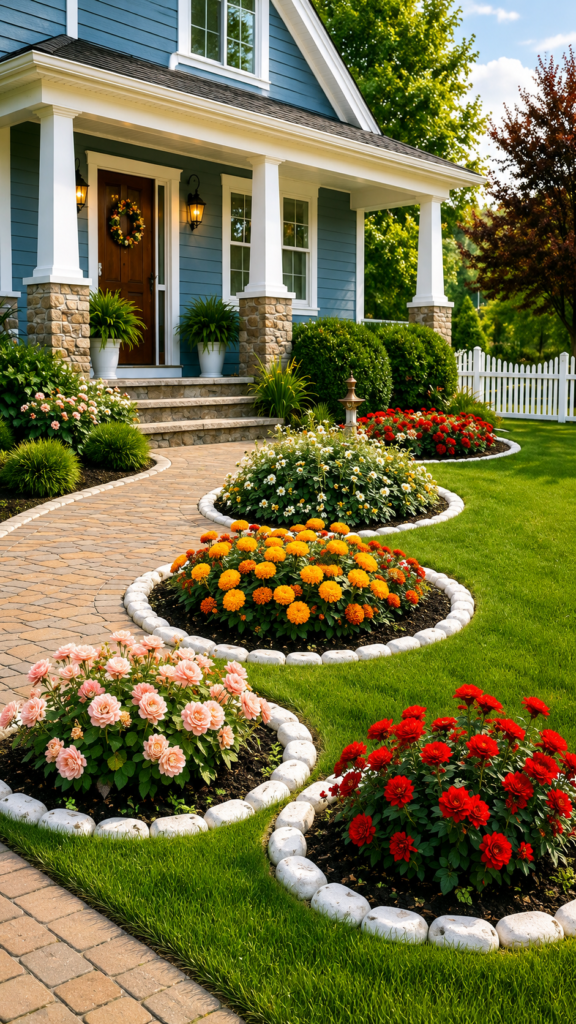
You do not need to landscape the whole front yard at once.
Start with the most visible spot.
That may be the mailbox, walkway, porch, or front foundation.
If you have less than $100, refresh a mailbox bed.
Remove weeds.
Add edging.
Add mulch.
Plant a few tough annuals or small perennials.
If you have around $250, work on the front porch area.
Use two small shrubs, five perennials, and mulch.
This can make the entry feel more welcoming.
If you have around $500, refresh a foundation bed.
Use a few shrubs for shape.
Add perennials for color.
Finish with mulch and a clean edge.
Spend money first on the parts that make the bed look cared for.
That means edging, mulch, soil improvement, and a few strong plants.
Do not buy too many small flowers first.
They may look pretty for a week, then disappear in the design.
A simple bed with clean edges often looks more expensive than a crowded bed.
Low Maintenance Tips to Keep Flower Beds Looking Good
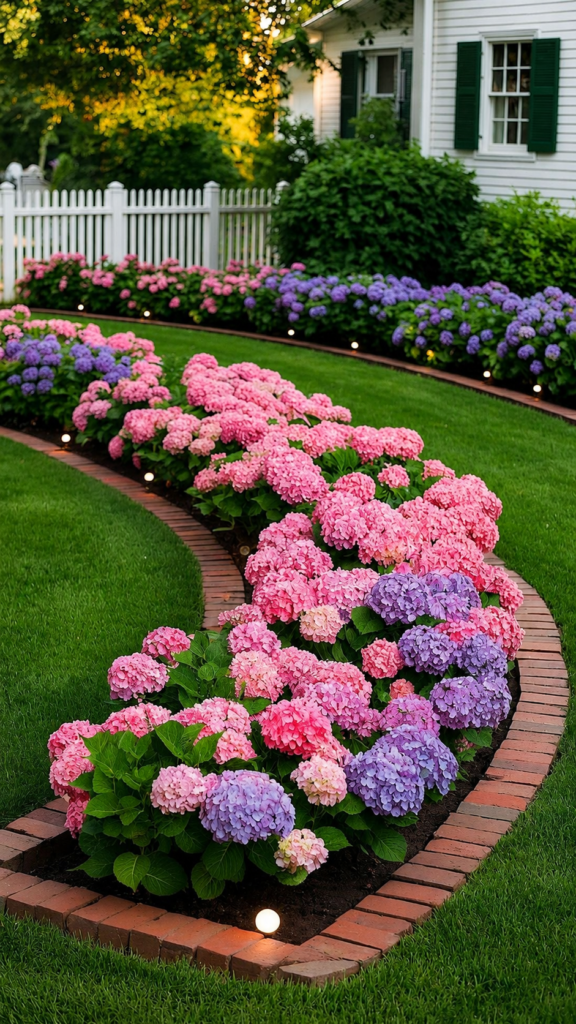
A low maintenance flower bed starts before planting day.
Choose plants that fit your climate.
Choose plants that fit your sun.
Choose plants that fit your water habits.
EPA WaterSense says choosing the right plants, building healthy soil, and using proper care are key parts of water wise landscaping.
Use mulch.
Mulch helps reduce weeds.
It also helps soil hold moisture.
Install edging.
Edging keeps grass from creeping into the bed.
Group plants by water needs.
Do not put thirsty flowers beside dry soil plants.
One side will suffer.
Water deeply while plants settle in.
Many plants need steady water at first, even if they need less water later.
Limit annuals if you want less work.
Annuals can give great color, but they often need more planting and care each year.
Use more perennials and shrubs for the main bed.
Then use annuals only near the front door, steps, or mailbox.
The easiest front yard flower beds are designed around your climate, not against it.
Common Front Yard Flower Bed Mistakes to Avoid
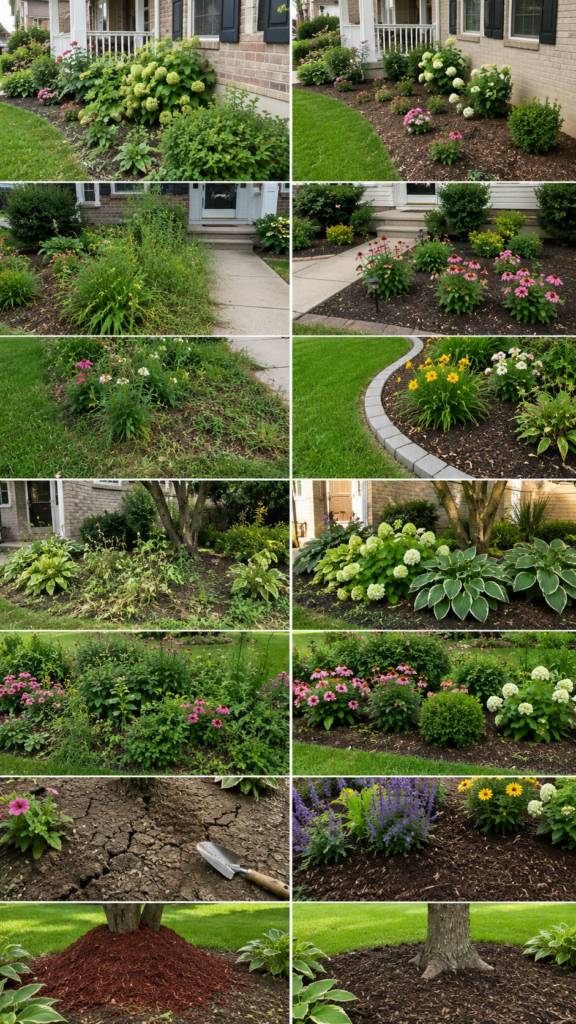
Most flower bed problems come from buying plants too fast.
The first mistake is skipping the sun check.
Do not guess.
Watch the area for one day.
The second mistake is buying by bloom color only.
A flower can look great at the store and still fail in your yard.
The third mistake is planting too close to the house.
Plants need room for air and growth.
The fourth mistake is making beds too narrow.
Thin beds can look like afterthoughts.
The fifth mistake is skipping edging.
Without an edge, grass and weeds move in fast.
The sixth mistake is using only spring flowers.
Your bed may look great in April and empty in July.
Mix plants that bloom in different seasons.
The seventh mistake is choosing spreaders for small beds.
Fast growing plants can take over.
The eighth mistake is using too much landscape fabric.
It can make future planting harder.
It can also block natural plant growth in some beds.
A simple bed done well is better than a busy bed that fights you all year.
Front Yard Flower Bed Ideas by Home Style
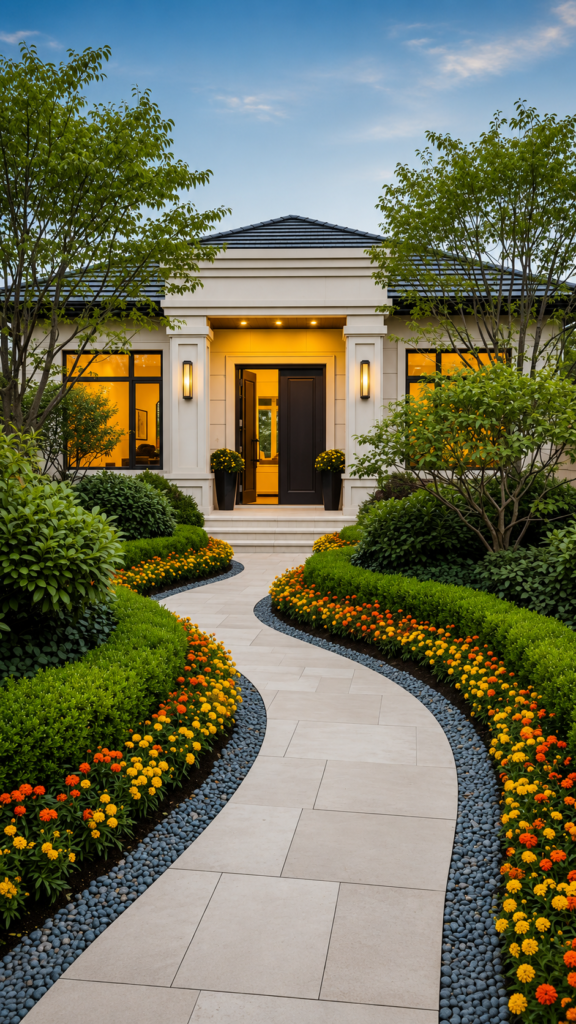
Your flower bed should match the shape and mood of your house.
For a ranch home, use a long curved foundation bed.
Repeat shrubs and perennials along the front.
This helps a long house feel softer.
For a cottage home, use soft edges and mixed flowers.
Try roses, lavender, daisies, and nepeta.
For a modern home, keep the bed simple.
Use straight lines, grasses, evergreens, and a limited color group.
For a farmhouse look, try hydrangeas, boxwood, lavender, white flowers, and clean mulch.
For a small house, use narrow beds, containers, and compact plants.
Do not block windows or the walkway.
For a brick house, choose colors that stand out.
White flowers look clean.
Purple salvia adds contrast.
Yellow black eyed Susan adds warmth.
For a black or dark gray house, use white blooms, silver leaves, and deep green shrubs.
Repeat one color from the front door, shutters, or porch decor.
That small detail helps the yard and house feel connected.
A Simple Weekend Plan to Build a Front Yard Flower Bed
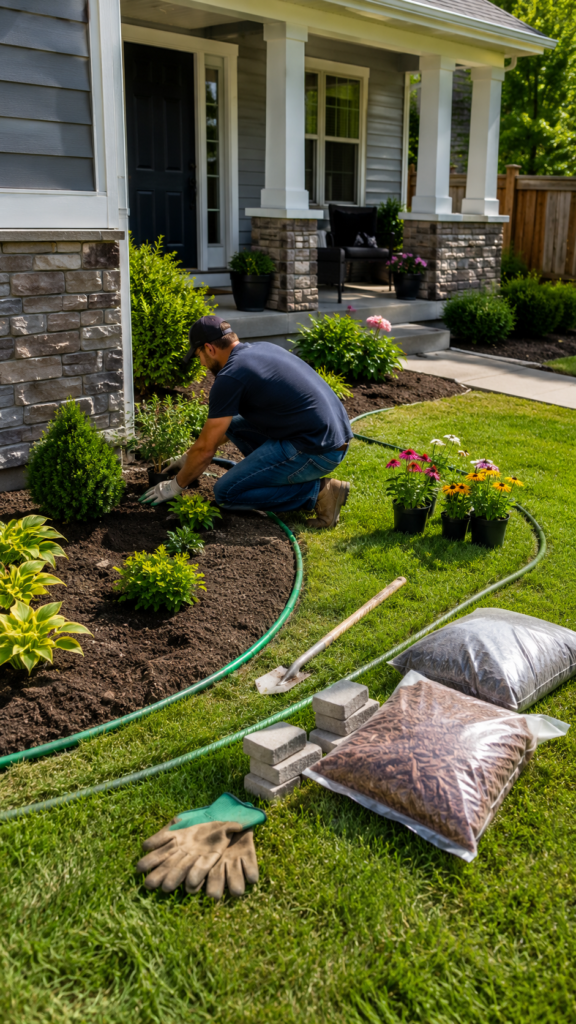
If you want a fast curb appeal project, start with one bed you can finish in a weekend.
Choose the most visible area first.
The walkway, porch, and mailbox are good choices.
On day one, mark the bed shape.
Use a garden hose, rope, or spray paint made for lawns.
Step back to the street.
Check the shape from there.
Remove grass and weeds.
Improve the soil with compost if needed.
Place plants while they are still in pots.
Move them around until the layout looks balanced.
Do not dig yet.
Check mature plant size before planting.
A small plant can become a wide plant later.
On day two, plant the tallest items first.
Then plant medium flowers.
Add low edging plants last.
Water deeply.
Add mulch.
Keep mulch away from plant stems and tree trunks.
Add edging if the bed touches grass.
Clean the walkway after you finish.
Then step back to the curb again.
Ask yourself five questions.
Can you see the front door?
Do plants block windows?
Does the bed guide the eye?
Is the edge clean?
Is there color near the entry?
Before digging deep or installing stakes, check local rules for utility marking.
This helps you avoid hidden lines.
Final Thoughts
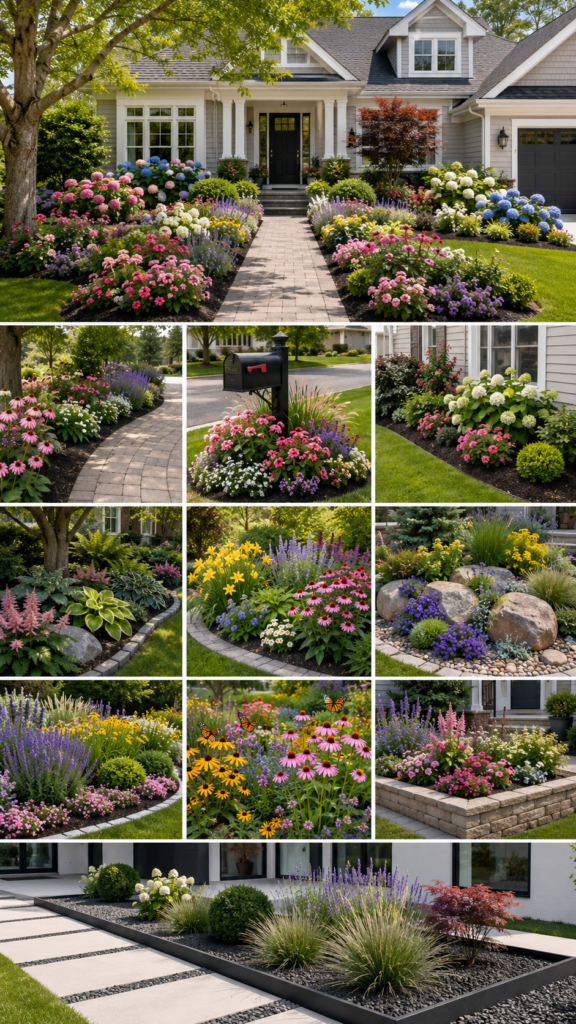
Your front yard does not need a full redo to feel fresh.
Start with one clear flower bed.
Choose plants that match your sun, soil, zone, and water needs.
Use mulch and edging for a clean finish.
Repeat plants so the bed looks planned.
If you want fast results, begin with the walkway, porch, or mailbox.
If you want less work, build the bed around shrubs and perennials first.
Then add annuals only where you want quick color.
The best front yard flower bed ideas for curb appeal are the ones that fit your home, your climate, and the amount of care you can actually give.